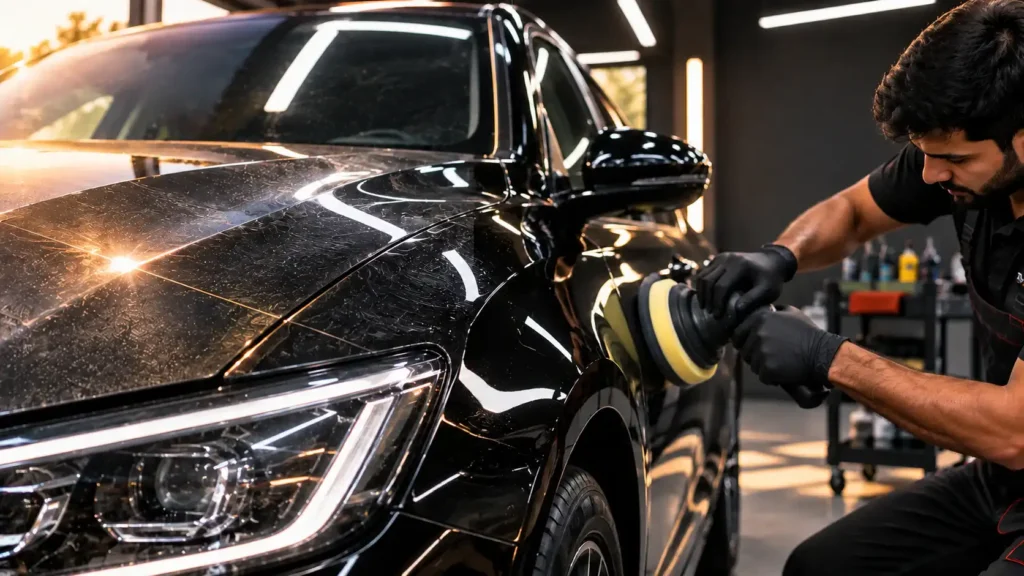
Your car may need Professional Paint Correction if the paint looks dull, has swirl marks, fine scratches, water spots, oxidation, or an uneven finish. These issues can make your car look older and poorly maintained even when it is regularly washed. Professional paint correction helps restore the clarity, smoothness, and shine of the paint.
Key Takeaways
- Swirl marks and fine scratches are common signs of paint damage.
- Dull or faded-looking paint may need professional attention.
- Water spots and oxidation can affect the paint’s appearance.
- Paint correction is different from basic washing or waxing.
- Deep scratches and dents may require car dent repair or repainting.
What Is Professional Paint Correction?
Professional Paint Correction is a detailing process that improves the appearance of a vehicle’s paint by reducing or removing suitable surface imperfections.
Unlike regular washing and waxing, paint correction focuses on the clear coat and paint surface. Professionals use carefully selected polishing products and techniques based on the condition of the vehicle.
The aim is to restore a smoother, clearer, and more reflective finish without unnecessarily removing the clear coat.
6 Signs Your Car Needs Paint Correction
1. Swirl Marks Are Visible
If you notice circular or spider-web-like marks when sunlight or a bright light hits your car, you may be seeing swirl marks. These often develop because of incorrect washing, rough drying materials, or automatic car washes.
Paint correction can reduce many of these visible marks and improve the overall finish.
2. Your Car Looks Dull After Washing
Does your car look clean but still lack shine? Paint can become dull because of oxidation, environmental exposure, improper washing, and general wear.
If regular washing no longer brings back the gloss, professional correction may help restore the paint’s appearance.
3. Fine Scratches Are Everywhere
Small scratches around door handles, panels, and other frequently touched areas can gradually make a vehicle look tired.
Light surface scratches may respond well to paint correction. However, deeper scratches that have gone through the clear coat may need car dent repair or professional repainting.
4. Stubborn Water Spots Are Visible
Rainwater, hard water, and washing can leave mineral deposits on the paint. If these spots remain for a long time, they can become difficult to remove and may even etch the surface.
When normal cleaning is not enough, professional paint correction may help improve the affected area.
5. Different Panels Have Different Shine Levels
If one part of your car looks glossy while another looks dull or hazy, the paint condition may be uneven. This can happen due to different levels of sun exposure, previous polishing, or earlier body repairs.
A professional inspection can determine whether correction is suitable or if car denting & painting services are needed.
6. You Want Your Car to Look Better Before Selling
Paint condition can strongly influence a buyer’s first impression. Swirl marks, dull areas, and light scratches can make a vehicle appear older than it actually is.
Paint correction can improve the overall appearance and help present the vehicle in better condition before resale.
Is Paint Correction the Same as Polishing?
Not exactly. Polishing is generally one part of the paint-correction process.
Professional correction involves inspecting the paint, identifying the type of imperfections, choosing suitable products, and using the right polishing technique. The process also requires care because aggressive polishing can unnecessarily reduce clear-coat thickness.
When Do You Need Car Denting & Painting Services?
Paint correction is mainly designed for surface-level imperfections. It cannot repair deep dents, exposed metal, peeling paint, or severe scratches that have damaged the paint layers.
In these situations, car denting & painting services may be more suitable. Depending on the damage, the vehicle may need dent repair, repainting, or a combination of services.
How Often Should You Get Paint Correction?
There is no fixed schedule for paint correction. It depends on your vehicle’s paint condition, washing habits, parking environment, and previous detailing work.
Instead of correcting the paint unnecessarily, consider getting it inspected when you notice imperfections that regular cleaning cannot resolve.
Conclusion
Swirl marks, fine scratches, water spots, oxidation, and a dull finish are common signs that your car’s paint may need professional attention. While Professional Paint Correction can improve many surface imperfections, more serious damage may require car dent repair or car denting & painting services.
Autotouch Cars can help assess your vehicle’s paint condition and determine the right solution for restoring its appearance.
FAQs
Does paint correction remove all scratches?
No. Paint correction can improve many light surface scratches, but deep scratches may require repainting or other repairs.
Is paint correction safe for car paint?
Yes, when performed correctly. The paint should be assessed first so the appropriate polishing method can be selected.
How long does professional paint correction take?
The time depends on the vehicle size, paint condition, and level of correction required. A heavily marked vehicle may require more time.
Can paint correction restore faded paint?
It can improve dull or oxidized paint when the underlying paint is still in good condition. Severely damaged or peeling paint may require repainting.
Should I wash my car before paint correction?
Yes. The vehicle should be thoroughly cleaned before correction to remove dirt and contaminants from the surface.