
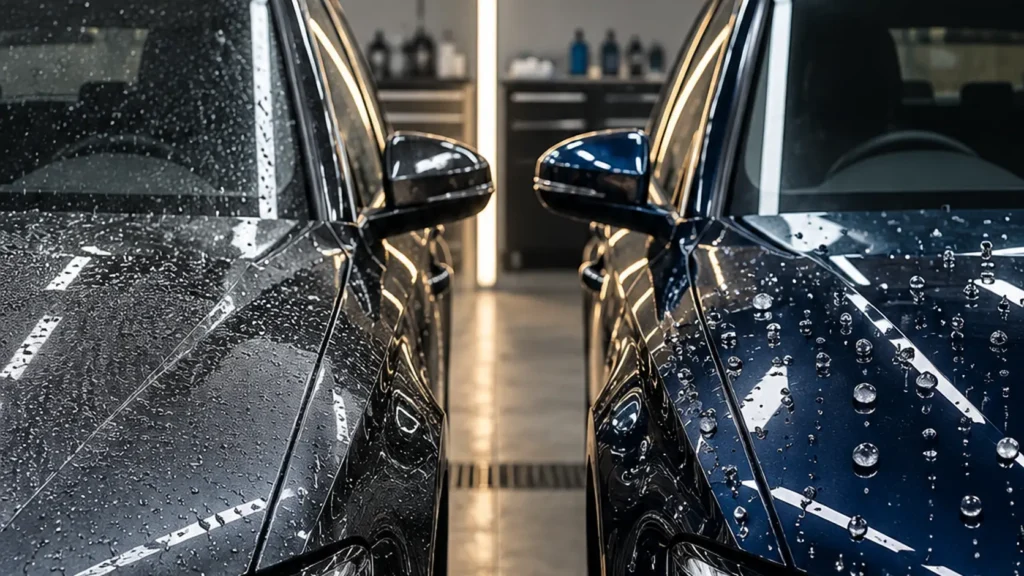
The main difference between 9H ceramic coating and 10H ceramic coating is the level of hardness claimed by the coating. A 10H coating is generally marketed as harder than a 9H coating, but hardness alone does not determine the overall quality or protection of a ceramic coating. Factors such as coating formulation, application, durability, surface preparation, and maintenance also matter.
If you are comparing 9H vs 10H ceramic coatings, it is better to look beyond the H rating and consider what protection your car actually needs.
What Is Ceramic Coating?
Ceramic coating is a liquid protective layer applied to a vehicle’s painted surface. Once cured, it forms a bonded layer that can improve gloss, water repellency, and resistance to everyday contaminants.
Unlike traditional car wax, ceramic coatings are designed to provide longer-lasting protection when properly applied and maintained.
Professional ceramic coating services usually include paint preparation, decontamination, polishing when required, coating application, and curing.
What Does 9H Mean in Ceramic Coating?
9H ceramic coating refers to a hardness rating commonly used in ceramic coating marketing. The “H” is associated with the pencil hardness scale used to measure resistance to scratching under a specific testing method.
A higher number does not automatically mean that your car will be completely scratch-proof.
A quality 9H coating can provide:
- Improved surface protection
- Strong water and dirt repellency
- Enhanced paint gloss
- Easier cleaning
- Resistance against some everyday contaminants
- Protection from environmental exposure
However, ceramic coating should not be considered a replacement for proper driving, washing, and paint protection practices.
What Does 10H Mean in Ceramic Coating?
10H ceramic coating is marketed as having a higher hardness rating than 9H. Some manufacturers use the 10H label to indicate an advanced or premium coating formulation.
The important point is that 10H does not mean the coating is completely scratch-proof.
Sharp objects, stones, improper washing techniques, and physical impacts can still damage a coated vehicle. The actual performance of a coating depends on more than its advertised hardness.
9H vs 10H Ceramic Coating: What’s the Difference?
| Feature | 9H Ceramic Coating | 10H Ceramic Coating |
| Hardness claim | High | Higher |
| Gloss | High | High |
| Water repellency | Yes | Yes |
| Dirt resistance | Helps reduce adhesion | Helps reduce adhesion |
| Scratch protection | Limited | Limited |
| Long-term performance | Depends on product | Depends on product |
| Maintenance | Still required | Still required |
The biggest difference is the hardness claim, but this should not be the only factor you consider when choosing a coating.
Is 10H Ceramic Coating Better Than 9H?
Not necessarily.
A coating marketed as 10H may sound better because the number is higher, but real-world performance depends on several factors. The quality of the coating itself, preparation of the paint, installation process, curing conditions, and maintenance can have a significant impact.
For example, a professionally applied 9H coating can potentially perform better than a poorly applied 10H product.
Therefore, instead of choosing a coating only because it says “10H,” ask about:
- Coating durability
- Warranty offered
- Application process
- Paint preparation
- Water-repellent performance
- Maintenance requirements
- Experience of the installer
Benefits of Professional Ceramic Coating
Whether you choose a 9H or 10H product, professional installation can make a major difference.
Professional ceramic coating services typically start with thorough cleaning and paint preparation. Depending on the condition of the vehicle, paint correction may also be required before the coating is applied.
A properly installed coating can help provide:
Better Gloss
Ceramic coating can give the paint a deeper, cleaner, and more reflective appearance.
Hydrophobic Protection
Water tends to bead and roll off the coated surface more easily, making routine washing simpler.
Easier Cleaning
The coating can reduce the ability of dirt and some contaminants to strongly adhere to the paint.
Environmental Protection
A ceramic coating can help protect the paint from everyday exposure to contaminants such as road grime, bird droppings, and other pollutants.
Is Ceramic Coating Scratch-Proof?
No. This is one of the most common misconceptions about ceramic coating.
Even the best 9H ceramic coating or 10H ceramic coating cannot guarantee that your car will never get scratches, swirl marks, or stone chips.
Ceramic coating provides a protective layer, but it is not designed to absorb heavy physical impacts. For stronger protection against stone chips and deeper scratches, paint protection film (PPF) may be a more suitable option.
Which Ceramic Coating Should You Choose?
The right choice depends on your car, budget, driving conditions, and expectations.
If you want improved gloss, hydrophobic properties, and everyday paint protection, a professionally installed 9H ceramic coating can be a suitable option.
If a premium coating with a higher advertised hardness rating and additional product features is available, you may consider a 10H ceramic coating.
The best approach is to compare the complete coating system, rather than choosing only based on the H number.
Why Choose Auto Touch Cars?
Auto Touch Cars provides professional automotive care solutions for car owners looking to maintain their vehicle’s appearance and paint condition.
From surface preparation to coating application, choosing experienced professionals can help you get better and more consistent results from your ceramic coating.
Final Thoughts
The difference between 9H and 10H ceramic coatings is mainly associated with the advertised hardness level. However, a higher H rating does not automatically mean better overall protection.
When choosing between 9H ceramic coating, 10H ceramic coating, and other options, consider the coating quality, professional application, paint preparation, and maintenance. The right ceramic coating services can help protect your car’s finish while keeping it glossy and easier to maintain.
FAQs
1. Is 10H ceramic coating stronger than 9H?
10H ceramic coating is generally marketed as having a higher hardness rating than 9H. However, the H rating alone does not determine the overall performance of the coating.
2. Does 9H ceramic coating prevent scratches?
No. A 9H ceramic coating can provide some surface protection, but it is not scratch-proof. Improper washing, sharp objects, and physical impacts can still damage the paint.
3. How long does ceramic coating last?
The lifespan depends on the product, application quality, maintenance, and driving conditions. Different coatings can have significantly different durability claims.
4. Is ceramic coating better than car wax?
Ceramic coating is designed to provide longer-lasting protection than traditional wax. It can also offer stronger hydrophobic properties and a more durable protective layer.
5. Should I choose 9H or 10H ceramic coating?
Do not choose based only on the number. Compare the coating’s formulation, expected durability, application process, warranty, maintenance requirements, and the installer’s experience.
6. Can ceramic coating protect against stone chips?
Ceramic coating is not designed to protect against heavy impacts such as stone chips. PPF is generally more suitable when impact protection is the main priority.