
A new car always looks beautiful with its fresh paint and glossy finish. However, daily driving exposes its exterior to stone chips, scratches, dust, road debris, and minor impacts. Even careful drivers cannot completely avoid these problems. This is where Paint Protection Film (PPF) becomes useful.
PPF is a transparent protective film applied to a car’s painted surfaces. It helps protect the original paint from everyday damage while maintaining the vehicle’s appearance.
But what if you do not want to apply PPF to the entire car? In that case, knowing which parts of a car should get PPF first can help you protect the most vulnerable areas within your budget.
Let’s understand which car parts need PPF protection the most.
Quick Answer: Which Car Parts Should Get PPF First?
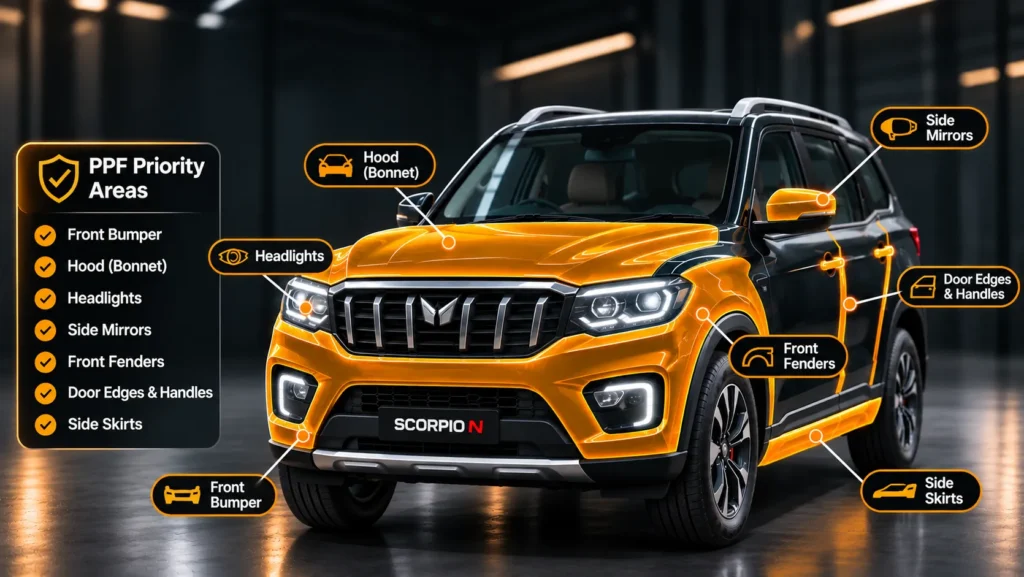
If you are planning to install PPF on your car, start with the front bumper, bonnet, front fenders, side mirrors, headlights, and door edges. These areas are more exposed to stone chips, scratches, road debris, and minor damage.
For better protection, you can gradually extend PPF coverage to door panels, rear bumper loading areas, and other painted surfaces.
1. Front Bumper
The front bumper is one of the most important areas to protect with PPF. It directly faces road debris, small stones, insects, and dust while driving.
Stone chips and scratches can damage its paint, especially when driving on highways or behind other vehicles.
Applying PPF to the front bumper helps reduce visible paint damage and keeps the front of your car looking clean.
Why should you protect it first?
- It receives frequent stone and road debris impacts.
- It is exposed to scratches and minor scuffs.
- Repainting can affect the original paint finish.
2. Car Bonnet (Hood)
The bonnet is another high-priority area for PPF installation. Since it faces forward, it regularly comes in contact with flying stones, insects, dust, and other road particles.
Even small stone chips can leave noticeable marks on the bonnet, particularly on darker car colours.
Installing PPF on the bonnet creates a protective layer over the original paint and helps maintain its glossy appearance.
Why should you protect it first?
- It receives direct exposure to road debris.
- Stone chips can leave permanent paint marks.
- It is a large and highly visible painted surface.
3. Front Fenders
Front fenders are located around the front wheels and are exposed to stones, mud, and debris thrown up by rotating tyres.
Without protection, these areas can develop scratches, paint chips, and other signs of wear.
Applying PPF to the front fenders helps protect the paint from everyday driving damage.
4. Side Mirrors
Side mirrors are among the most exposed parts of a car. They can easily get scratched by passing vehicles, tree branches, narrow parking spaces, and accidental contact.
Since side mirrors are also expensive to repair or replace on some vehicles, protecting them is a practical decision.
PPF helps keep their painted surfaces protected from minor scratches and everyday wear.
5. Headlights
Headlights are constantly exposed to dust, road debris, small stones, and environmental elements. Over time, their outer surfaces can develop scratches and visible marks.
Headlight PPF helps protect the lens surface from minor physical damage and everyday wear.
However, always choose a film designed specifically for automotive headlights to maintain proper light output and visibility.
6. Door Edges and Door Cups
Door edges and door cups are small areas, but they experience frequent contact and friction.
Door edges can get chipped when doors accidentally hit walls or nearby vehicles. Door cups can develop scratches from fingernails, rings, and keys while opening the car.
Applying PPF to these areas provides useful protection against everyday scratches and minor paint damage.
7. Rear Bumper and Boot Loading Area
The rear bumper and boot loading area are often overlooked during PPF installation.
However, luggage, shopping bags, suitcases, and other heavy items can accidentally scratch the paint while being loaded or unloaded.
PPF helps protect these surfaces from scratches, scuffs, and regular contact damage.
Full Car PPF vs Partial PPF: Which Should You Choose?
Your choice depends on your budget, driving habits, parking conditions, and how much protection you want.
| Feature | Partial PPF | Full Car PPF |
| Coverage | Selected vulnerable areas | Most exterior painted surfaces |
| Cost | More budget-friendly | Higher investment |
| Protection | Focuses on high-risk areas | More comprehensive coverage |
| Maintenance | Easier to manage | Protects more painted surfaces |
| Best for | Budget-conscious car owners | Owners wanting extensive protection |
If your budget is limited, partial PPF is a practical starting point. However, full car PPF offers more comprehensive protection against everyday exterior damage.
When Is the Best Time to Install PPF?
The best time to install PPF is when your car is new or its paint is still in excellent condition.
Installing PPF early helps protect the original paint before scratches, stone chips, and other damage appear.
If your car already has scratches or paint imperfections, the surface may need proper cleaning, polishing, or paint correction before installation.
Always choose a professional installer who uses quality film and follows the correct installation process.
Key Takeaways
- Start with the front bumper, bonnet, and front fenders for essential protection.
- Protect side mirrors and headlights from everyday road damage.
- Door edges and door cups need protection against frequent contact scratches.
- Rear bumper PPF helps prevent damage during luggage loading.
- Partial PPF is suitable for limited budgets, while full car PPF offers wider coverage.
- Installing PPF on a new car helps preserve its original paint for longer.
Frequently Asked Questions (FAQs)
1. Which part of a car needs PPF the most?
The front bumper, bonnet, and front fenders need PPF the most because they receive frequent exposure to stones, road debris, and other external elements.
2. Is partial PPF worth installing?
Yes, partial PPF is worth considering if you have a limited budget. It protects the most vulnerable areas of your car without requiring full exterior coverage.
3. Should I apply PPF to my car’s headlights?
Yes, headlight PPF can help protect the lens surface from minor scratches and road debris. Make sure you use a film specifically designed for headlights.
4. Can PPF prevent all scratches on a car?
No, PPF cannot prevent every type of scratch or damage. However, it provides an additional protective layer against minor scratches, stone chips, and everyday wear.
5. Is it better to install PPF on a new car?
Yes, installing PPF on a new car is a good option because the original paint is generally in better condition and can be protected before damage occurs.
Protect Your Car’s Original Paint with Auto Touch Cars
Your car deserves proper protection, whether it is brand new or has been part of your daily routine for years. Choosing the right PPF coverage can help maintain its appearance and reduce the impact of everyday road damage.
At Auto Touch Cars, professional car care and paint protection solutions can help you keep your vehicle looking its best. Choose the right PPF coverage based on your car, driving habits, and protection needs.