
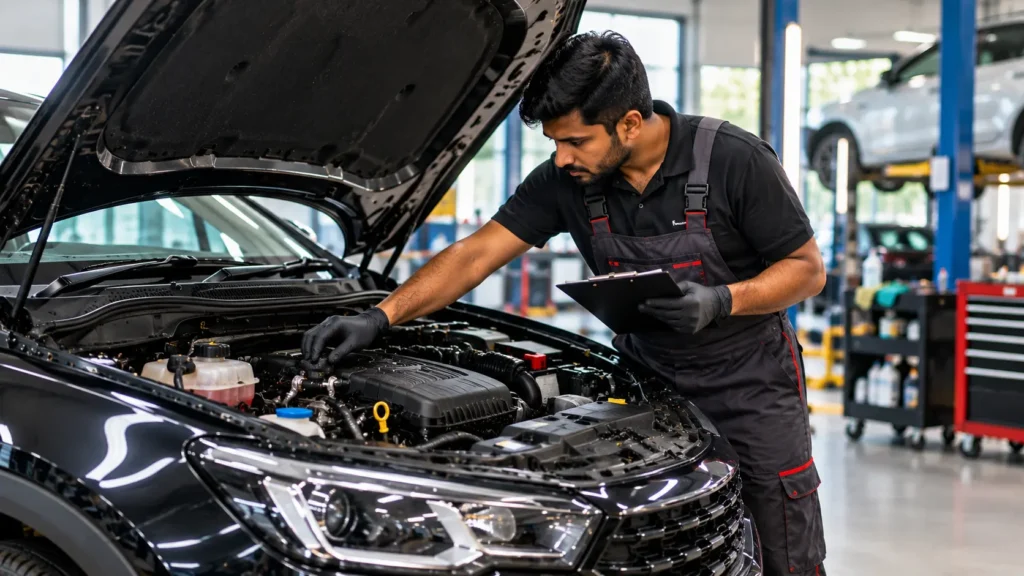
Regular car maintenance keeps your vehicle safe, reliable, comfortable, and efficient. A periodic maintenance service generally includes checking engine oil, brakes, tires, battery, fluids, filters, AC, lights, suspension, steering, belts, and other important components. Following the manufacturer’s recommended schedule helps identify minor issues early and reduces the chances of unexpected breakdowns and expensive repairs.
Key Takeaways
- Follow your manufacturer’s recommended service schedule.
- Check engine oil, coolant, and tire pressure regularly.
- Inspect brakes and tires for signs of wear.
- Replace filters when required.
- Check battery and electrical components.
- Inspect suspension, steering, belts, and hoses.
- Check the AC system before summer.
- Perform basic checks before long journeys.
Why Is Regular Car Maintenance Important?
Indian driving conditions can be challenging for vehicles. Heavy traffic, frequent braking, dust, extreme temperatures, potholes, and uneven roads can put additional stress on different components.
Routine vehicle maintenance helps identify worn or damaged parts before they become major problems. It can also support better fuel efficiency, smoother performance, driving comfort, and overall reliability.
Instead of waiting for a warning light or breakdown, following a maintenance schedule allows important components to be inspected at appropriate intervals.
Complete Car Maintenance Checklist
1. Check Engine Oil
Engine oil lubricates moving engine components and helps reduce friction and heat. Check the oil level regularly and replace it according to the manufacturer’s recommended interval.
Always use the oil grade and specification recommended for your particular vehicle. Delaying an oil change for too long can affect engine lubrication and performance.
2. Inspect Air and Oil Filters
Air and oil filters protect the engine from dust and contaminants. A dirty air filter can restrict airflow, while an old oil filter may not effectively remove contaminants from engine oil.
If you frequently drive through dusty roads or congested areas, regular filter inspection becomes especially important.
3. Inspect the Braking System
Brakes are among the most important safety components of a car. During scheduled servicing, technicians should inspect brake pads, discs or drums, brake fluid, brake lines, and the parking brake.
Squealing, grinding, vibrations, or increased stopping distance may indicate brake wear. These symptoms should be checked without unnecessary delay.
4. Check Tires and Wheel Alignment
Tyres affect braking, handling, stability, and road grip. Check tire pressure regularly and inspect the tread for uneven wear, cracks, cuts, or bulges.
Wheel alignment and balancing may be required if your car pulls to one side, the steering wheel vibrates, or tire wear becomes uneven.
5. Check Battery Health
The battery provides the power required to start your car and operate electrical systems. Inspect the battery terminals for corrosion and check its overall condition.
Slow engine cranking, difficulty starting, or dim electrical components can indicate a weak battery that needs professional inspection.
6. Check Fluids
Your car relies on several fluids for proper operation. These may include engine coolant, brake fluid, transmission fluid, power steering fluid where applicable, and windshield washer fluid.
Check fluid levels according to the manufacturer’s recommendations. Low levels, leaks, or contaminated fluids should be addressed promptly.
7. Maintain the AC System
A properly functioning AC system is essential during India’s hot weather. Check cooling performance, the cabin air filter, blower, refrigerant system, and other related components.
If the AC takes too long to cool the cabin, produces unusual smells, or makes strange noises, schedule an inspection.
8. Check Lights and Electrical Components
All lights should work properly for safe driving and visibility. Check headlights, brake lights, indicators, fog lights, reverse lights, and hazard lights.
During scheduled servicing, electrical connections, fuses, and other relevant components can also be inspected.
9. Inspect Suspension and Steering
Potholes, speed breakers, and rough roads can affect suspension and steering components over time.
Watch for knocking sounds, excessive bouncing, steering vibration, uneven tyre wear, or the vehicle pulling to one side. These signs should be investigated because suspension and steering affect vehicle control.
10. Check Belts, Hoses, and Wipers
Belts and hoses can deteriorate because of age, heat, and regular use. Inspect them for cracks, leaks, looseness, or visible damage.
Windshield wipers should also be checked regularly. Good wipers are particularly important during the monsoon because clear visibility is essential in wet conditions.
Car Maintenance Schedule
The exact interval depends on your vehicle’s make, model, age, mileage, and manufacturer’s recommendations. This general schedule can help you plan routine maintenance.
| Maintenance Task | Suggested Frequency |
| Tire pressure | Every 2–4 weeks |
| Engine oil level | Monthly |
| Lights and indicators | Monthly |
| Engine oil and filter | As per the manufacturer |
| Air filter | As recommended |
| Brake inspection | Every service |
| Battery check | Every 6–12 months |
| Wheel alignment | As needed |
| AC inspection | Before summer or as needed |
| Coolant check | Every service |
| Suspension inspection | Every service |
| Belts and hoses | Every service |
| Full vehicle inspection | As per the manufacturer |
These intervals are general guidelines. Always follow the schedule provided in your owner’s manual.
What Happens If You Skip Maintenance?
Skipping scheduled maintenance can allow small problems to become expensive repairs. Worn brake pads can affect stopping performance, underinflated tires can increase wear, and old fluids may affect vehicle components.
A periodic maintenance service helps identify these issues earlier and keeps your vehicle dependable for daily driving.
What Should You Check Before a Long Trip?
Before travelling long distances, inspect tyre pressure, engine oil, coolant, brakes, lights, battery, windshield wipers, and the spare tyre or tyre repair kit.
Also check for visible fluid leaks and make sure all dashboard warning lights are functioning normally. These simple checks can help reduce the risk of avoidable problems during your journey.
Final Thoughts
Regular vehicle maintenance is about more than preventing breakdowns. It helps maintain safety, comfort, reliability, and performance throughout your car’s life.
Following the manufacturer’s maintenance schedule and getting a professional periodic maintenance service can help detect problems early and reduce unexpected repair costs. For professional car servicing and vehicle care, Auto Touch Cars can help keep your vehicle ready for everyday city driving and longer journeys.
Frequently Asked Questions
How often should I service my car?
Follow the interval recommended by your vehicle manufacturer. It may be based on time, kilometers driven, or whichever comes first.
Is maintenance necessary if my car is running normally?
Yes. Some mechanical problems do not produce obvious symptoms during their early stages. Regular inspections can identify wear before it becomes serious.
Does regular servicing improve fuel efficiency?
Proper maintenance can support efficient vehicle operation. Correct tire pressure, clean filters, suitable fluids, and a well-maintained engine can contribute to efficient fuel consumption.
What should I check between services?
Check tire pressure, engine oil, coolant, lights, washer fluid, and visible signs of leaks or tire damage. Pay attention to unusual sounds, vibrations, or warning lights.
Can I perform basic maintenance myself?
Yes. Owners can usually check tyre pressure, fluid levels, lights, and washer fluid. Technical components such as brakes, suspension, steering, and engine systems should be inspected by trained professionals.