Your car’s paint is constantly exposed to sunlight, dust, road debris, scratches, bird droppings, and other environmental elements. Over time, these factors can affect its appearance and reduce its shine. This is why choosing the right car paint protection is important.
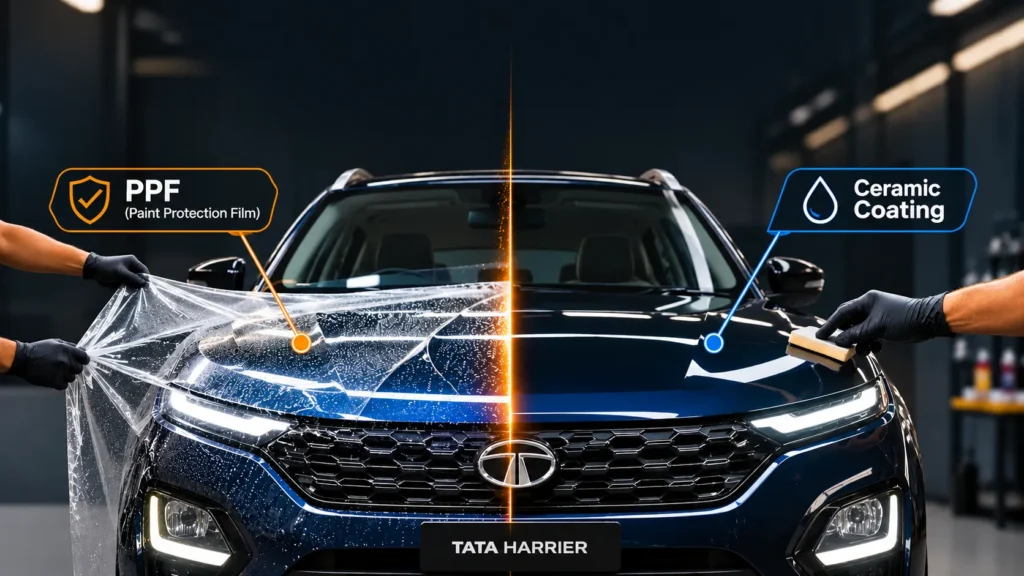
Two popular options are Paint Protection Film (PPF) and ceramic coating. Both help protect your car’s exterior, but they work differently and offer different benefits.
So, when comparing PPF vs ceramic coating, which one should you choose? Let’s understand their differences, advantages, costs, and suitability to help you make the right decision.
What Is Paint Protection Film (PPF)?
Paint Protection Film (PPF) is a transparent, durable film applied to your car’s painted surfaces. It acts as a physical barrier between the original paint and external damage.
Modern PPF is usually made from thermoplastic polyurethane (TPU), which offers flexibility, durability, and impact resistance.
Key benefits of PPF:
- Scratch Protection: Helps protect against minor scratches, stone chips, and road debris.
- Self-Healing Properties: Some advanced PPF films can repair light surface scratches when exposed to heat.
- Stain Resistance: Helps prevent stains from bird droppings, tree sap, and other contaminants.
- Paint Preservation: Protects the original paint from everyday physical damage.
- Long-Term Protection: High-quality PPF can offer several years of protection when properly maintained.
PPF is particularly useful for areas like the front bumper, bonnet, side mirrors, door edges, and other high-impact sections.
What Is Ceramic Coating?
Ceramic coating is a liquid protective product applied to your car’s exterior. It chemically bonds with the vehicle’s clear coat, creating a durable protective layer.
It mainly protects against environmental contaminants, enhances the car’s gloss, and makes regular cleaning easier.
Key benefits of ceramic coating:
- Hydrophobic Effect: Makes water bead up and roll off the surface.
- Enhanced Gloss: Gives your car a smooth, glossy, and attractive finish.
- UV Protection: Helps reduce paint oxidation and fading caused by sunlight.
- Chemical Resistance: Offers protection against certain chemical contaminants and stains.
- Easy Maintenance: Makes it easier to remove dust, dirt, and other surface contaminants.
Ceramic coating is a good option for car owners who want to maintain their vehicle’s shine and make everyday maintenance easier.
PPF vs Ceramic Coating: Key Differences
Although both options protect your car’s paint, their protection methods are different. Here is a quick comparison:
| Feature | PPF | Ceramic Coating |
| Main Purpose | Physical paint protection | Surface protection and shine |
| Scratch Protection | Protects against minor scratches | Limited resistance to light surface marks |
| Stone Chip Protection | Yes, depending on film thickness and impact | No meaningful protection |
| UV Protection | Yes | Yes |
| Water Repellency | Available in many films | Excellent hydrophobic properties |
| Self-Healing | Available in selected films | No |
| Gloss Enhancement | Available in glossy finishes | Excellent |
| Maintenance | Requires proper film care | Requires regular maintenance |
| Durability | Generally 5–10 years, depending on product | Generally 2–5 years, depending on product |
Actual performance and lifespan depend on product quality, installation, driving conditions, and maintenance.
Which Is Better: PPF or Ceramic Coating?
The answer depends on what kind of protection your car needs.
Choose PPF if:
- You frequently drive on highways.
- You want protection against stone chips and minor scratches.
- Your car is new or has an expensive paint finish.
- You want to preserve the original paint for longer.
- You regularly drive in areas with heavy traffic or road debris.
Choose ceramic coating if:
- You want your car to maintain its glossy appearance.
- You want easier washing and cleaning.
- Your car is regularly exposed to dust, sunlight, and rain.
- You want hydrophobic protection against water and contaminants.
- Your main priority is appearance and easier maintenance.
If physical paint protection is your priority, PPF is generally the better choice. If shine, water repellency, and easy maintenance matter more, ceramic coating is a suitable option.
Can You Apply PPF and Ceramic Coating Together?
Yes! In fact, combining PPF and ceramic coating can provide more complete paint protection.
Many car owners choose to apply PPF on high-impact areas such as the bonnet, front bumper, and side mirrors. Ceramic coating can then be applied over compatible PPF surfaces and the remaining painted areas.
This combination offers several benefits:
- PPF provides physical protection against stone chips and minor scratches.
- Ceramic coating improves gloss and water repellency.
- Both help keep the vehicle looking cleaner.
- The original paint receives more comprehensive protection.
However, always ensure that the ceramic coating is compatible with the installed PPF.
PPF vs Ceramic Coating: Which One Is More Cost-Effective?
The cost of both services depends on your car’s size, product quality, coverage area, and installation process.
PPF generally requires a higher investment because it involves specialised film material and careful installation. Ceramic coating is usually more affordable, although premium coating packages can also be expensive.
If your main concern is preventing physical paint damage, PPF can be a worthwhile long-term investment. If you mainly want shine and easier maintenance, ceramic coating may offer better value.
Rather than choosing only based on price, consider your driving habits, budget, and protection requirements.
Frequently Asked Questions (FAQs)
1. Is PPF better than ceramic coating?
PPF is better for physical protection against stone chips, scratches, and road debris. Ceramic coating is better for enhancing gloss, water repellency, and easier maintenance.
2. Can ceramic coating prevent scratches?
Ceramic coating offers limited resistance to light surface marks but cannot prevent stone chips, deep scratches, or physical damage.
3. How long does PPF last on a car?
High-quality PPF can generally last around 5–10 years, depending on the brand, installation quality, environmental conditions, and maintenance.
4. Can ceramic coating be applied over PPF?
Yes. Ceramic coating can be applied over compatible PPF to improve its gloss, water repellency, and ease of cleaning.
5. Is PPF worth it for a new car?
Yes. Applying PPF to a new car can help protect its original paint from road debris, minor scratches, and everyday physical damage.
Final Thoughts
Choosing between PPF vs ceramic coating depends on your car protection goals. PPF offers stronger physical protection, while ceramic coating focuses on shine, water repellency, and easier maintenance.
If you want more comprehensive protection, combining both can be a smart choice.
At Auto Touch Cars, choosing the right car paint protection solution starts with understanding your vehicle and driving needs. Investing in the right protection can help maintain your car’s appearance and preserve its original paint for years to come.